
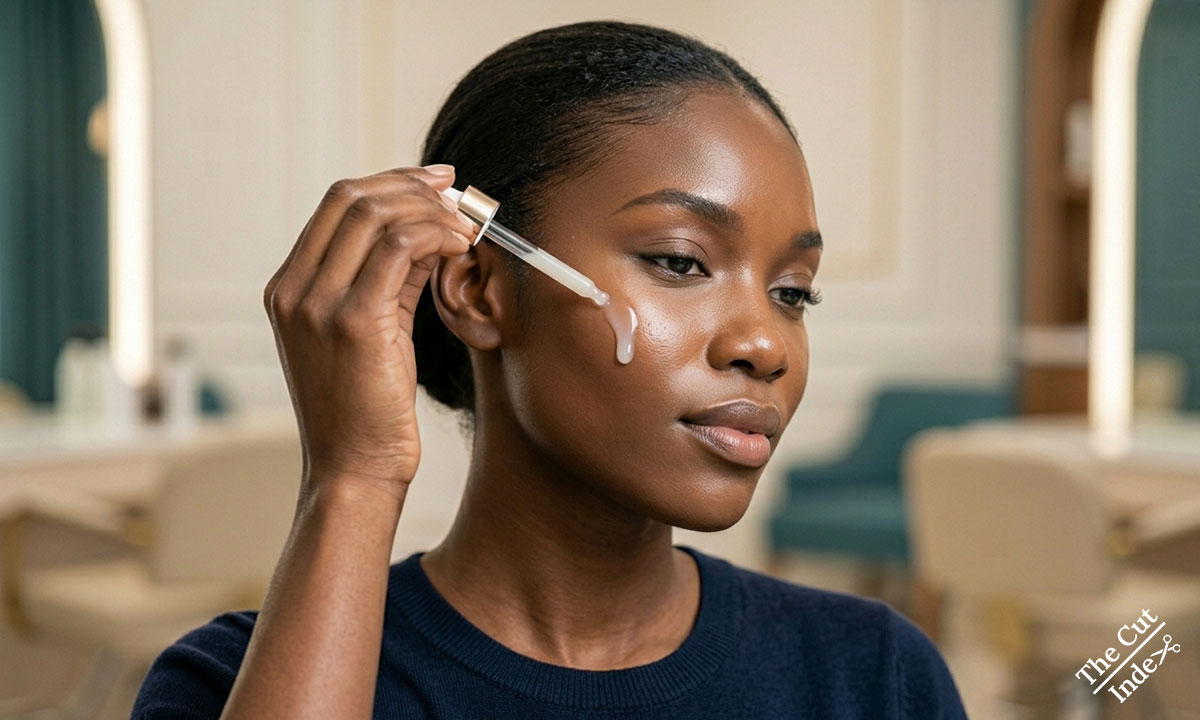
The women’s skincare trends 2026 delivered weren’t dramatic — they were structural. The vocabulary shifted from anti-aging to skin longevity, a softer, smarter framing that treats skin as a living system rather than a surface to police. Alongside it, two ideas hardened into the spine of the year: barrier health is the foundation everything else sits on, and regenerative biotech — peptides, exosomes, growth factor mimetics — is the new prestige flex. The wrinkle-erasing pitch is fading. The keep-skin-functioning pitch is taking over.
That shift reshuffled the shelves. Comfort-first formulas — milky essences, calming creams, fragrance-free moisturizers — are now editorial picks, not boring ones. Retinal is replacing classic retinol. Slugging stayed. Sunscreen is being sold as a longevity tool, not a beach product. If the words barrier serum, retinal, peptide cream, and exosome sound like a different language, this is the translation — ten categories, what they do, and who actually needs them.
Gentle Cleanser
The first product in the routine and the one most worth getting right. The 2026 version is a cream, milk, or balm cleanser that lifts sunscreen and sweat without stripping the skin barrier — the opposite of the squeaky-clean foaming washes that dominated the 2010s. Look for the words cream cleanser, milky cleanser, or cleansing balm. Foaming cleansers haven’t disappeared, but they’ve moved into the only if your skin tolerates them tier. If you finish washing your face and it feels tight, the product is too harsh.
Hydrating Toner or Essence
Toners stopped being astringent witch-hazel splashes years ago. The 2026 version is a watery toner or milky essence — a thin, slightly viscous layer that hydrates and preps the skin for whatever comes next. Korean and Japanese routines made the category mainstream; Western brands followed. Look for words like essence, hydrating toner, or first treatment essence. It’s the most skippable step on the list if you’re keeping things minimal, but it’s also the one that makes the rest of a routine feel softer and more cohesive.
Barrier Serum
The fastest-rising category of the last two years and the new foundation product across the women’s skincare trends 2026 lineup. A barrier serum is built around ceramides, peptides, panthenol, or a combination — ingredients that reinforce the skin’s outer wall so it loses less water and reacts less to weather, exfoliants, retinoids, and daily friction. If your skin has been red, tight, or quietly inflamed for months, this is probably the category to start with rather than another active. Marketed as barrier repair, recovery serum, or cica. Boring on paper, transformative in practice.
Hyaluronic Acid Serum
The category that survived every trend cycle and earned it. Hyaluronic acid is a humectant — it pulls water into the upper layers of the skin and makes everything else absorb better. Used under a moisturizer, it plumps fine lines temporarily and keeps the skin from feeling parched by mid-afternoon. The 2026 versions often combine multiple molecular weights (so it hydrates at different depths) and stack panthenol or polyglutamic acid for staying power. Useful for almost everyone. Especially useful in winter, on flights, and after exfoliation.
Vitamin C Serum
The morning antioxidant step. Vitamin C neutralizes the free radicals generated by sun and pollution, brightens dullness over time, and softens the look of dark spots. The 2026 versions tend to be lower-percentage and better-formulated than the 15–20% L-ascorbic acid bottles that ruled a few years back — gentler, more stable, less likely to oxidize into a useless orange liquid in your drawer. Look for vitamin C serum, vitamin C + ferulic, or stabilized derivatives like ethyl ascorbic acid. Layered under sunscreen, it’s a quiet long-term play.
Retinal or Modern Retinoid
Retinol earned its reputation. Retinal — its faster-acting cousin — is taking over the 2026 conversation because it works at lower concentrations with less irritation. The category also includes encapsulated retinoids and slow-release formulations designed to deliver results without the peeling, redness, and barrier disruption that turned a lot of people off the original. It’s the closest thing skincare has to a proven anti-aging active, but the 2026 framing is gentler: smoother texture, fewer breakouts, better tone over time. Start low, build slow, always pair with SPF.
Peptide Cream
The prestige category of the moment and one of the defining women’s skincare trends 2026 rallied around. Peptides are short chains of amino acids that signal the skin to produce more collagen, repair faster, or calm down — depending on the peptide. The 2026 versions stack multiple peptides with delivery systems (liposomes, nanocarriers) that get the actives where they’re meant to go. Marketed as peptide cream, regenerative cream, or longevity cream. The science is genuinely interesting, the prices climb fast, and the visible results take months.
Moisturizer
The unglamorous workhorse. A good moisturizer locks in everything underneath, smooths the surface for makeup or sunscreen, and keeps the barrier from drying out overnight. The 2026 versions lean comfort-first — fragrance-free, ceramide-rich, often described as milky, cushiony, or cloud. Lighter gel-creams for oily and combination skin; richer balms for dry and mature. The right moisturizer should feel slightly boring; if it tingles, stings, or has a strong scent, it’s probably working harder than it needs to.
Daily SPF
The single most evidence-backed product on the list. Sunscreen prevents most visible aging, full stop — which is why the 2026 messaging has moved from beach-product to longevity-tool. The formulas finally caught up with the demand: lightweight serum-textures, invisible mineral filters, hydrating chemical filters that don’t pill or leave a cast. Daily SPF now means broad-spectrum SPF 30 or higher, worn indoors and out, reapplied if you’re outside for hours. The single best long-term skin investment, and the one most people still underuse.
Overnight Recovery Mask
The finishing layer for the routine, and the category that turned slugging into a global trend. An overnight mask or balm seals everything in while the skin does its repair work — barrier rebuilding, cell turnover, hydration recovery. The 2026 versions range from sleeping masks (gel, lightweight) to slugging balms (occlusive, heavy) to newer exosome-infused overnight treatments that promise regenerative support. Not a nightly necessity, but a useful reset two or three times a week — especially after a long flight, a strong active, or a winter week that left the face dry and tight.
Your Starter Shelf for the 2026 Women’s Skincare Trends
The full ten is a map, not a shopping list. Most routines only need three or four:
Dry or mature skin: Gentle cleanser, hyaluronic acid serum, barrier serum or peptide cream, SPF.
Oily or combination skin: Gentle cleanser, lightweight hydrating essence, vitamin C in the morning, SPF, retinal a few nights a week.
Sensitive or reactive skin: Gentle cleanser, barrier serum, fragrance-free moisturizer, SPF. Hold every other category until skin calms down.
Building from zero: Cleanser, moisturizer, SPF. Add a single active — usually retinal or vitamin C — once that trio is a habit.
The 2026 shift isn’t more products. It’s fewer products doing measurable work over a longer time. Skin longevity is patient by design.
· · ·