
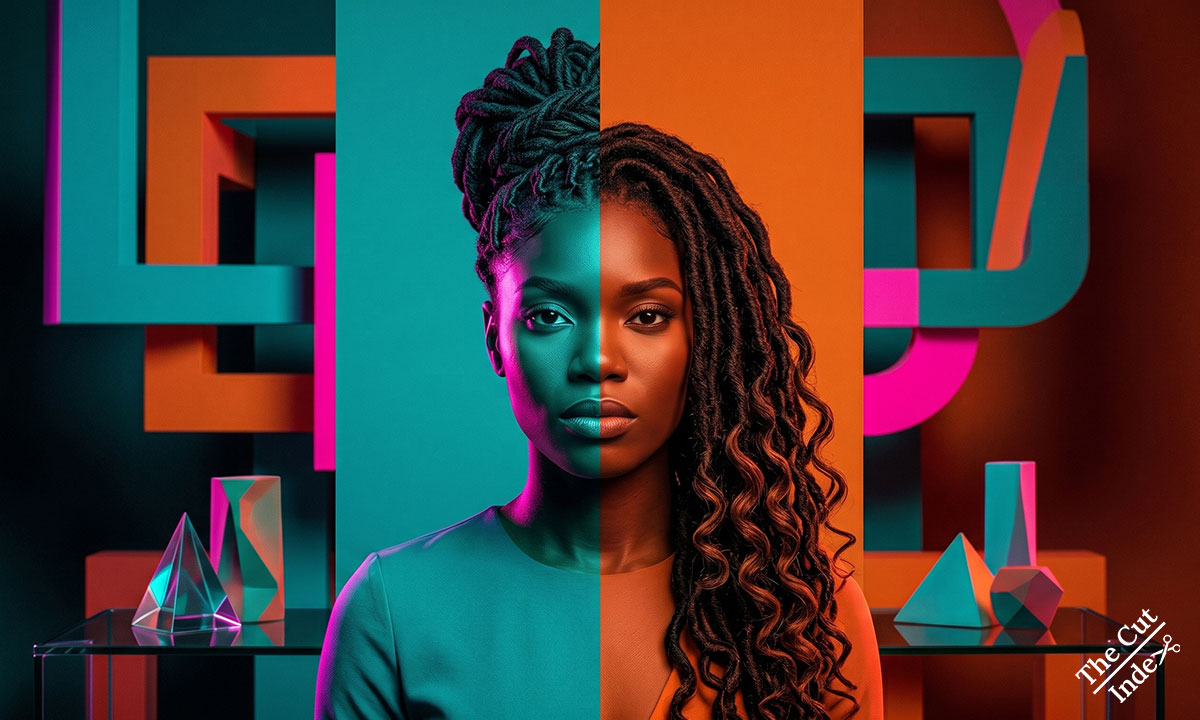
Dreadlock styles 2026 don’t look like the dreadlock styles of five years ago. What used to be one style has opened up into a whole family of styles — a range of techniques, sizes, cuts, and finishes, each with its own personality. Dreadlocks used to be one style. In 2026, they’re a whole family of styles. Before going further, it’s worth saying out loud: locs carry deep cultural, spiritual, and historical meaning across African, Rastafarian, and other traditions. That foundation hasn’t changed. What’s changed is the styling vocabulary built around it — and in 2026, that vocabulary is wider than ever. This is the field guide. Ten loc styles worth knowing, what makes each one different, and who each one suits.
Traditional Locs
Start here, because everything else is a variation of this. Traditional locs are formed by sectioning the hair into parts and locking each section through palm-rolling, two-strand twists, or interlocking. The diameter is medium to large. The finish is neat and uniform. They work on almost any hair texture, which is part of why they remain the most common starting point in 2026. They’re also the most flexible long-term — you can keep them tidy with regular retwisting, or stop maintaining them later and let them open up into a freer shape. If you’re new to locs and not sure which direction you want, traditional is the safest first step.
Microlocs
Microlocs are the precision version. They’re small — usually around 2 to 3 millimeters thick — and there are hundreds of them on a single head. The appeal in 2026 is lightness. They sit closer to the way loose hair moves, which means more styling options: updos, curls, half-up looks, even braids built from the locs themselves. They take longer to install than traditional locs and need consistent retightening every four to six weeks, but for anyone who wants the long-term commitment of locs without the visual weight, microlocs are the answer.
Sisterlocks
Sisterlocks are a specific kind of microloc. The technique was created by Dr. JoAnne Cornwell in 1993 and is trademarked, which means only certified practitioners can install them. They’re tiny — the same 2 to 3 millimeter range as microlocs — but installed using a specific patented tool and grid pattern from root to tip. The result is uniform, refined, and built to last for years. Sisterlocks suit readers who want the most polished version of small locs and don’t mind a higher install cost or the longer search for a certified stylist.
Freeform Locs
Freeform locs are the opposite of everything above. No parting, no twisting, no retightening. The hair is left to lock on its own through natural matting, with minimal intervention beyond washing. The locs that form are large, irregular, and unique to the person wearing them — no two heads of freeform locs look the same. This style has deep cultural and spiritual roots, especially within Rastafarian tradition, and it’s the lowest-maintenance loc style by a wide margin. Freeform suits anyone drawn to the natural, hands-off philosophy and willing to let the hair shape itself over time.
Faux Locs
Faux locs are not real locs. They’re a protective style where synthetic or human hair is wrapped or braided around the natural hair to look like locs, then removed after six to eight weeks. The point is access without commitment. You can wear locs for a wedding, a summer, a trip — and take them out when you’re done. In 2026, faux locs are also where a lot of texture and color experimentation happens, because nothing about the install is permanent. They’re the easiest way to find out whether the loc look suits you before going further.
Goddess Locs With Open-Spirited Ends
This is one of the defining looks of 2026. The locs themselves stay sleek and uniform along most of their length, then loosen at the tips into soft curls, waves, or coils. The contrast — structured at the top, free at the ends — is the whole point. It reads as polished and bohemian at the same time, which is why it’s everywhere on Instagram and Pinterest right now. The style works as both a real install and a faux loc finish, making it accessible to a wide range of readers.
The Tapered Loc Bob
The biggest shape shift in 2026 is that locs are being cut. Specifically, cut into shapes. The tapered loc bob — shorter at the back, longer at the front, with layered movement — is the leading example. For years, locs were worn at uniform blunt lengths. Now stylists are treating them like any other hair: shaping them, layering them, building silhouettes. The tapered bob suits anyone who wants their locs to feel intentional and styled rather than simply grown out.
Soft Curled Ends
If there’s one finish showing up across nearly every install style this year, it’s curled ends. Pipe-cleaner sets, perm rods, or rollers are used to add bounce and movement at the tips, replacing the older look of stiff, straight loc ends. The effect is softer and more dimensional. It works on traditional locs, microlocs, faux locs, and goddess locs alike. It’s the easiest 2026 refresh for anyone who already has locs and wants to update the look without changing the install.
Long Locs
Length is doing a lot of work in 2026. Floor-skimming locs, waist-length statement locs, locs worn as the entire visual argument — search interest in long loc styles has climbed sharply this year. Growing locs this long takes patience; depending on hair type, it can take five to ten years or longer. But the payoff is a style where the locs themselves are the whole look, no styling required. Long locs suit anyone in it for the long term and willing to let time do the work.
Loc Updos and Sculpted Styling
The final layer is what you do with the locs once they’re there. Updos, top knots, half-up styles, and braided integrations turn locs from a hair state into an actual hairstyle. This is where locs become formal, festival-ready, work-appropriate, or red-carpet, depending on the styling. The versatility increases with smaller loc sizes — microlocs and sisterlocks have the most updo range — but every loc type can be styled up. In 2026, the styling layer is where personality shows.
Your Starter Shelf for the Dreadlock Styles 2026
Mapping the loc styles 2026 has opened up to who each one actually suits:
If you’re starting from scratch and want the most flexible long-term option: Traditional locs. They work on most textures and can shift in style direction as you grow with them.
If you want precision, lightness, and the most styling range: Microlocs or Sisterlocks. Higher install commitment, but the daily payoff is range.
If you’re loc-curious but not ready to commit: Faux locs. Six to eight weeks, fully removable, full styling experience.
If you already have locs and want a 2026 refresh: A tapered bob cut or soft curled ends. Both work as updates without starting over.
If you want the lowest-maintenance, most natural version: Freeform locs. Let the hair do the work.
Dreadlocks used to be one style. In 2026, they’re a whole family of styles — and the question isn’t whether to wear them. It’s which one is yours.
· · ·