
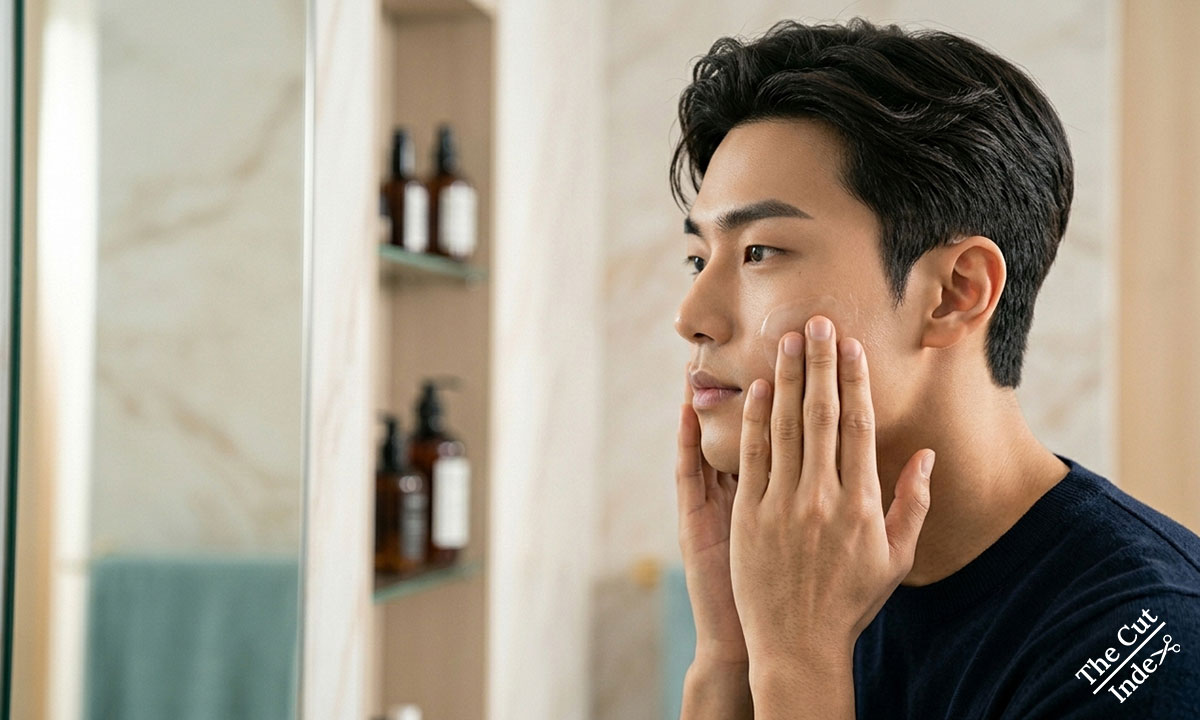
The men’s skincare trends 2026 delivered weren’t elaborate — they were practical. The bar-soap era is over and the 12-step routine was never coming. What’s actually winning in 2026 is somewhere between the two: three to five products, used consistently, doing measurable work. More than half of US men now keep a daily skincare routine — the highest number on record — and the segment is the fastest-growing in personal care. The driver isn’t vanity. It’s that the information caught up. Men started reading ingredients, watching dermatologists on social media, and realizing that skincare is closer to dental hygiene than to cosmetics.
That shift reshaped the shelves. Cleansers and moisturizers still dominate — they’re the categories most men buy first — but post-shave repair, daily SPF, eye creams, and peptide serums have moved into the everyday conversation. The 2026 vocabulary is barrier, peptide, SPF habit, post-shave repair. The version of the routine that sticks is functional, minimal, and quietly upgraded. Here’s the ten-category map, in the order most men actually build it.
Face Cleanser
The first product that replaces bar soap, and the one that quietly upgrades everything downstream in the men’s skincare trends 2026 category map. Bar soap is alkaline and strips the skin barrier; a proper face cleanser is pH-balanced and rinses cleanly without that tight, squeaky finish. The 2026 versions are mostly gel or cream — gel for oilier skin, cream for normal-to-dry. Look for gel cleanser, cream cleanser, or hydrating face wash. Skip foaming cleansers if your skin runs dry or sensitive. Used morning and night, this single swap solves more skin problems than any active you could buy.
Chemical Exfoliant
The category that replaced face scrubs. Physical scrubs felt productive but caused micro-tears, especially on skin already stressed by shaving. Chemical exfoliants — usually a BHA (salicylic acid) for oily and acne-prone skin, or an AHA (glycolic or lactic) for texture and dullness — dissolve the dead surface cells without abrasion. Most arrive as a thin toner or pad you swipe on two or three nights a week. Look for BHA toner, AHA exfoliant, or exfoliating toner. Start twice a week, scale up only if the skin tolerates it.
Lightweight Moisturizer
The single most-searched men’s skincare term of 2026, and the second product most men buy after a cleanser. The category has finally figured out the assignment: hydration without shine, comfort without weight. The 2026 versions are gel-creams, milky lotions, and oil-free moisturizers that absorb in seconds and don’t leave a film under a hat or a screen. Heavier creams still exist for dry skin and winter, but the dominant texture is light. Used morning and night, it locks in the cleanser’s work and gives sunscreen a stable surface to sit on.
Eye Cream
The gateway second product. The skin around the eyes is thinner, drier, and shows fatigue first — which is why most men notice it before anything else. A good eye cream targets puffiness, dark circles, and the fine lines that show up around screens, sleep debt, and travel. The 2026 versions lean toward caffeine for de-puffing, peptides for firmness, and lightweight gel textures that don’t migrate. A small tube lasts months. Not strictly essential, but the category most men actually feel the difference from within a few weeks of starting.
Serum (Niacinamide or Peptide)
The functional active step, and where men’s routines start to get interesting. Niacinamide is the workhorse — it controls oil, reduces redness, evens tone, and almost nobody reacts to it. Peptide serums are the longevity play — they signal collagen production and skin repair over months, not days. The 2026 versions often stack both, plus zinc or panthenol. Marketed as niacinamide serum, peptide serum, or simply daily serum. One serum is plenty for most routines; two is the ceiling before things start canceling each other out.
Retinol
The maintenance treatment that earned its spot. Retinol speeds up cell turnover, smooths texture, fades dark spots, and softens the look of fine lines. Used long-term, it’s the closest thing skincare has to a proven anti-aging active — but the 2026 framing is closer to keeps skin looking sharp than erases the years. Start with a low concentration, two or three nights a week, always paired with SPF the next morning. Encapsulated retinols and the newer retinal formulations are gentler entry points if classic retinol has caused redness or peeling in the past.
Daily SPF
The most evidence-backed product in the entire routine, and the one men still underuse the most. SPF prevents most visible aging — uneven tone, fine lines, leathery texture — and dramatically lowers skin cancer risk. The 2026 sunscreen formulas finally solved the texture problem: lightweight, invisible, no white cast, no greasy finish. Look for SPF 30 or SPF 50, broad-spectrum, worn every morning regardless of weather. Reapply on long outdoor days. If you only ever add one product to bar soap, this is the one that quietly does the most work.
Post-Shave Repair
The category men actually buy first, and the one converting skeptics into routine-keepers across the men’s skincare trends 2026 conversation. Razor burn, ingrown hairs, and stinging redness are the most common complaints among men who shave daily — and a proper post-shave product solves them in days. The 2026 versions skip alcohol-heavy aftershaves and lean on aloe, allantoin, panthenol, and centella to calm the skin and rebuild the barrier. Marketed as post-shave balm, aftershave repair, or soothing serum. Functional, immediate, and the easiest entry point into a wider routine.
Lip Balm with SPF
The smallest upgrade with the most disproportionate payoff. Lips have almost no melanin and almost no oil glands, which makes them the most sun-vulnerable part of the face and the first to chap in cold weather. A lip balm with SPF 15 or higher protects from both. The 2026 versions are unscented, non-glossy, and live in a pocket without being noticed. One of the cheapest products on this list, and the one most men ignore until they don’t.
Body Wash and Body Lotion (Treatment-Grade)
The fastest-growing segment of the year. Body care is finally being treated like face care — body washes with niacinamide, AHAs, or salicylic acid; body lotions with ceramides, peptides, and urea. The use cases are practical: back acne, keratosis pilaris (those rough bumps on upper arms), dry shins in winter, post-gym skin. The 2026 versions are functional, not perfume-led. If face care has been working and the rest of the body still looks neglected, this is the upgrade.
Your Starter Shelf for the 2026 Men’s Skincare Trends
The full ten is a map, not a shopping list. Most routines only need three or four:
Oily or acne-prone skin: Gel cleanser, BHA exfoliant a few nights a week, lightweight moisturizer, SPF.
Dry or sensitive skin: Cream cleanser, niacinamide serum, richer moisturizer, SPF.
Shaves daily: Cleanser, post-shave repair, lightweight moisturizer, SPF. Add retinol later.
Building from zero: Cleanser, moisturizer, SPF. That’s the whole routine until it’s a habit. Everything else is an upgrade, not a requirement.
The 2026 shift isn’t a longer routine. It’s a shorter one that actually gets used. Functional, minimal, and quietly upgraded — bar soap couldn’t compete.
· · ·